
Introduction to 11v11 Soccer Formations
When players move from small-sided games like 7v7 or 9v9 into full-field soccer, they are introduced to the 11v11 soccer formations. This stage of the game brings out the importance of tactics, spacing, and positioning. Coaches need to understand soccer positions by number 11v11 and how formations influence play. Whether it’s the popular 4-3-3 formation, a defensive 4-4-2, or an attacking 3-5-2, each setup impacts how the game is played.
Understanding Soccer Positions by Number 11v11
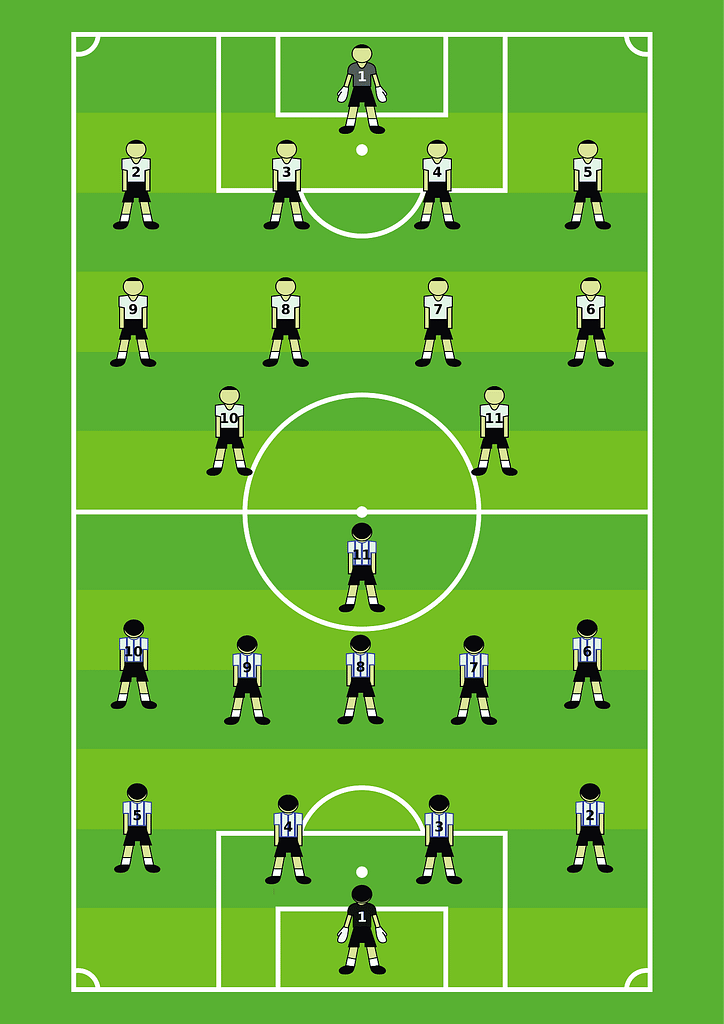
Every position in soccer is traditionally assigned a number. These numbers help players understand their responsibilities:
- #1 – Goalkeeper
- #2 & #3 – Left & Right Defenders
- #4 & #5 – Central Defenders (also called central defender soccer)
- #6 – Defensive Midfielder (soccer number 6)
- #7 & #11 – Wingers
- #8 – Central Midfielder
- #9 – Striker
- #10 – Attacking Midfielder soccer (playmaker)
Knowing these numbers is crucial to implementing 11v11 soccer formations successfully.
Popular 11v11 Soccer Formations
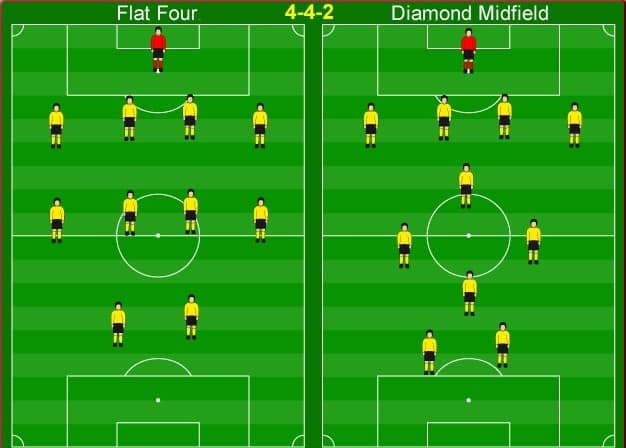
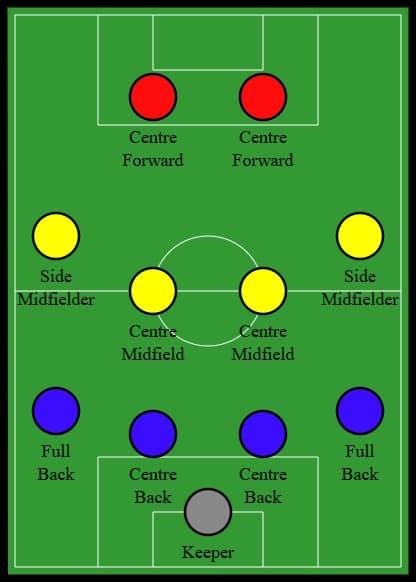
The 4-4-2 Formation
One of the most classic and balanced setups. It has:
- Four defenders (including a left defender and right back).
- Four midfielders.
- Two strikers up front.
This formation works well for teams focusing on structure and discipline.
The 4-3-3 Formation Numbers
A favorite in modern football. It places:
- Four defenders.
- Three midfielders, often including a soccer number 6 as a holding player.
- Three attackers: two wingers (#7 and #11) and a central striker (#9).
This is considered one of the strongest formations because it balances defense and attack.
The 3-5-2 Formation
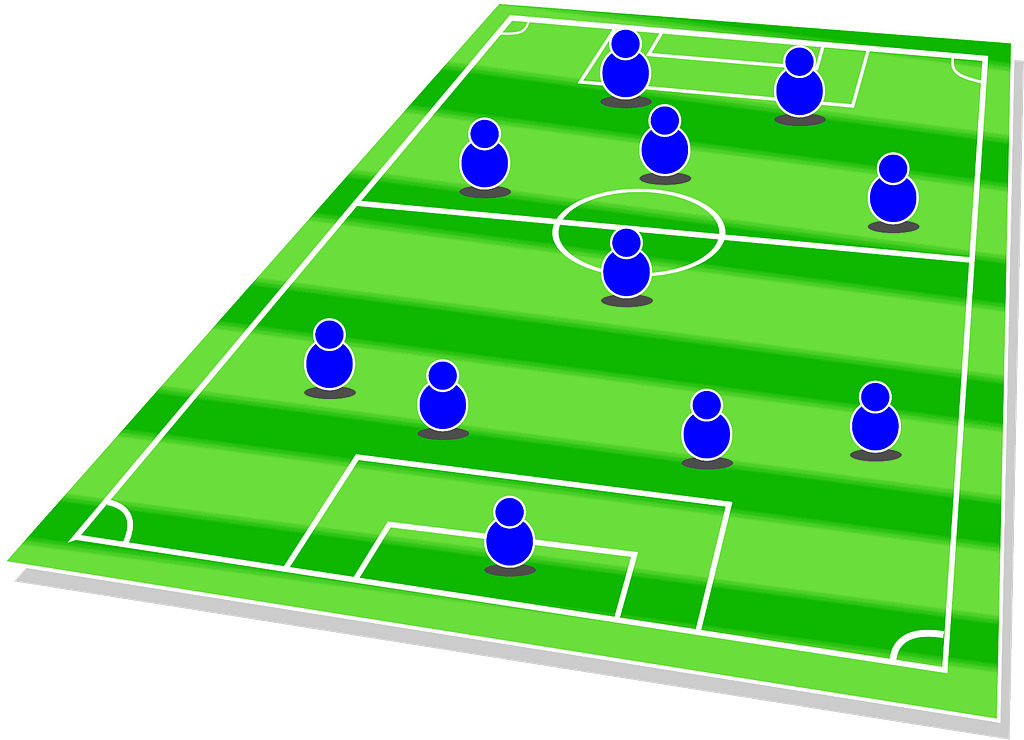
This system uses three center-backs, five midfielders, and two strikers. The midfield becomes dominant, and the number 10 soccer role thrives here.
The 4-2-3-1 Formation
A modern tactical choice:
- Four defenders.
- Two defensive midfielders.
- Three attacking midfielders.
- One striker.
It offers flexibility and support for counterattacks.
How Many Players on a Soccer Field?
A full match uses 11 players per team, making it 22 total on the field. This is why formations like 11v11 soccer formations are the standard for competitive play.
Youth Soccer Transition from 7v7 and 9v9 to 11v11
Young players often start in smaller-sided formats:
- 7v7 soccer formations (commonly for U9 and U10).
- 9v9 soccer formations (for U11 and U12).
- Transitioning to 11v11 at U13+.
Understanding soccer positions for kids is key to teaching them how to spread across a larger field.
Key Roles in 11v11 Soccer Formations
- Goalkeeper (#1): Protects the net (how big is a soccer goal varies by age group).
- Defenders (#2, #3, #4, #5): Left defender, right defender, and central defenders.
- Midfielders (#6, #8, #10): Defensive anchor, box-to-box, and attacking midfielder.
- Wingers (#7, #11): Provide width and crosses.
- Striker (#9): Main goal scorer.
Strongest Formation in Modern Soccer
Many coaches argue that the 4-3-3 is the strongest formation in today’s game. It gives balance, allows for pressing, and gives freedom to creative players like the number 10 soccer role.
Soccer Field Layout and Positioning
A full-size field allows for proper spacing. Coaches often use a soccer field print to teach players positioning. By visualizing zones, kids learn to hold shape.
Choosing the Right Formation for Your Team
The team maker approach depends on players’ skills. A team with strong wingers may use 4-3-3, while one with dominant midfielders could benefit from 3-5-2. Flexibility is the key to building a successful system.
FAQs on 11v11 Soccer Formations
Q1: What is the best formation for youth soccer?
A: Many coaches recommend the 4-3-3 formation numbers as it teaches spacing and attacking principles.
Q2: Which formation is easiest to teach kids?
A: The 4-4-2 is simple, making it suitable for introducing soccer positions for kids.
Q3: Can a team switch formations during a match?
A: Yes, many professional teams adapt, switching from defensive to attacking shapes mid-game.
Q4: What role does the number 10 soccer position play?
A: The attacking midfielder creates chances, connects midfield to attack, and often dictates play.
Q5: How do 7v7 and 9v9 soccer formations prepare kids for 11v11?
A: Smaller formations help kids develop spacing, teamwork, and an understanding of roles before transitioning to full-field soccer.
About Goalnyx
At Goalnyx, we are passionate about providing valuable resources for coaches, players, and soccer fans. Whether you’re learning about 7v7 soccer formations, exploring 11v11 soccer formations, or searching for the strongest formation for your team, Goalnyx is your hub for tactical knowledge, training tips, and game insights.