

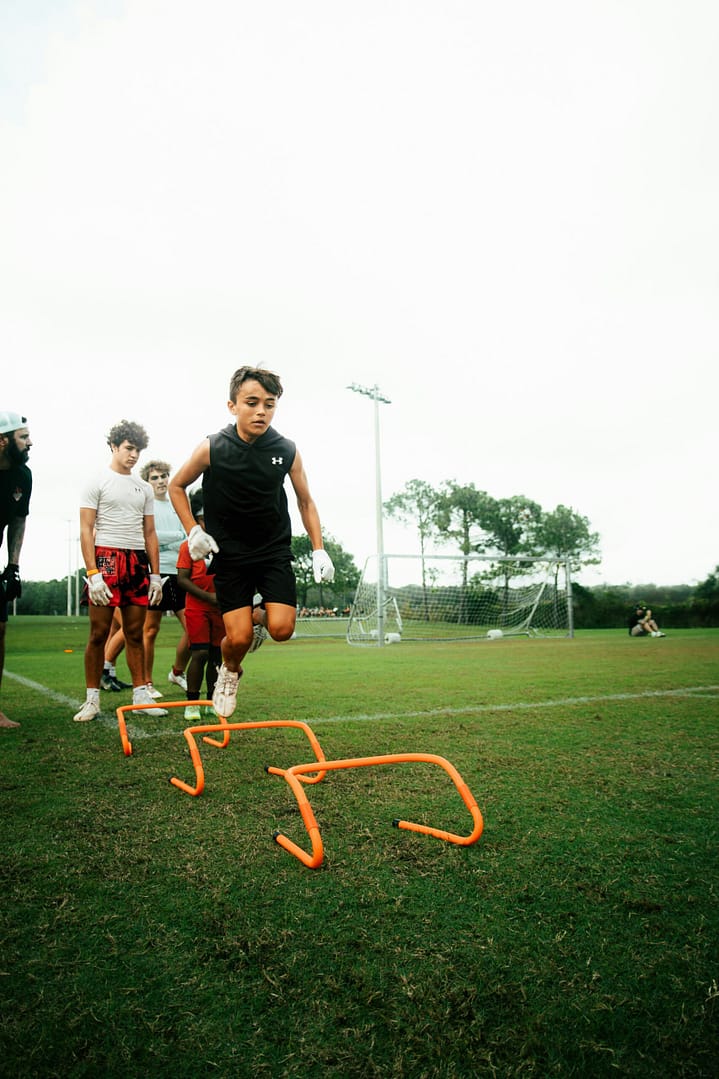
Elite soccer players do not win matches because they can juggle a ball for Instagram. They dominate because they move faster than everyone else with control. Watch the top level closely and you’ll notice something uncomfortable: most players aren’t sprinting nonstop. They’re exploding for two or three steps, stopping, cutting, reacting, and repositioning again. That’s where games are decided.
This is exactly why agility ladder drills for soccer matter. Not as a gimmick. Not as a warm-up filler. But as a neurological training tool that sharpens foot speed, coordination, balance, and reaction time. Soccer isn’t linear. It’s chaotic. Your feet must respond faster than your opponent’s brain.
If you think ladder work is “too basic,” you’re already behind. When used correctly, soccer agility ladder drills rewire how players move faster ground contact, sharper directional changes, and cleaner transitions between skills. This article breaks down 11 progressive soccer ladder drills, from beginner to advanced, and shows how to use them properly so they actually transfer to match performance.
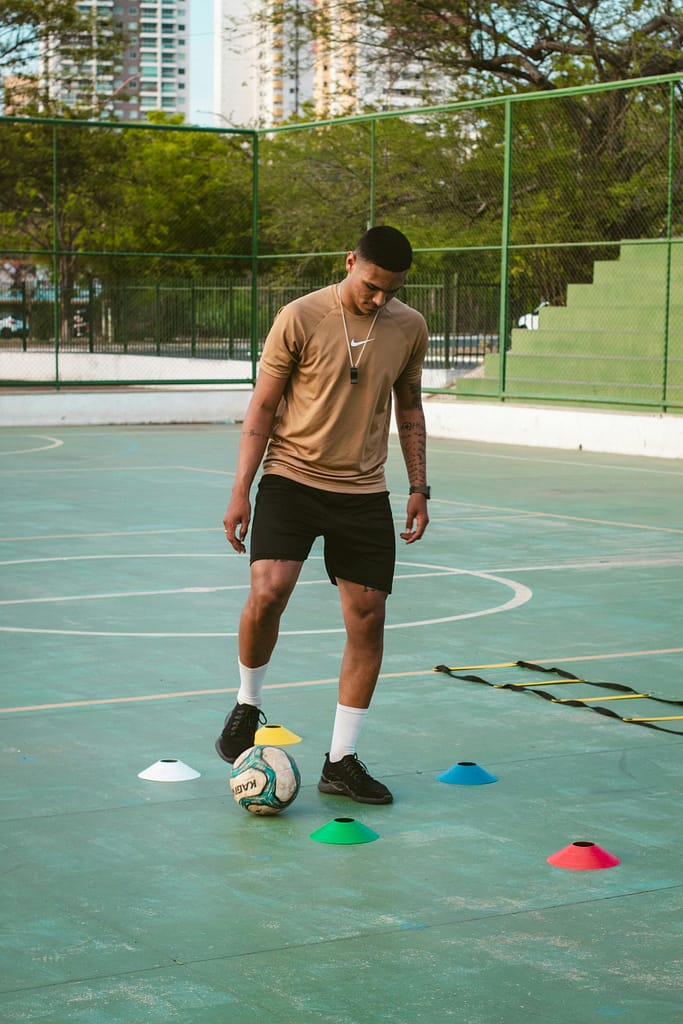
Why Agility Ladder Training Works for Soccer Players
Agility ladder training works because soccer is a neuromuscular sport, not just a cardiovascular one. Every touch, cut, and acceleration depends on how quickly the nervous system communicates with the muscles. Soccer agility exercises improve this connection by forcing precise, repeated foot placements under speed.
One major benefit is first-step quickness. Most soccer actions happen in the first two steps pressing, breaking away, closing space defensively. Speed ladder drills for soccer players shorten ground contact time, allowing faster acceleration without wasted motion.
Another overlooked advantage is proprioception, your body’s awareness in space. Ladder drills force players to control their limbs without staring at their feet. This improves balance, coordination, and confidence when receiving the ball under pressure. That’s why football agility ladder drills translate so well to real play.
Mentally, ladder drills enhance processing speed. Random patterns, directional changes, and reaction-based drills train the brain to make faster decisions, a critical component of soccer SAQ training (speed, agility, quickness).
Finally, agility ladder soccer training is low-impact. You can perform soccer conditioning drills frequently without joint overload, making ladders perfect for in-season maintenance and youth soccer ladder drills.
How to Use Agility Ladders Effectively (Setup & Guidelines)
Most players waste ladder sessions because they treat them casually. Setup matters. Place the ladder on flat ground with enough space (at least 10–15 yards) for acceleration after the final rung. Soccer ladder training sessions should never end abruptly and always transition into movement.
Always warm up first. Light jogging, dynamic stretches, and mobility work are mandatory. Cold muscles plus fast feet equal injury.
Quality beats quantity every time. Each drill should be sharp, fast, and intentional. Rest 20–40 seconds between sets. If foot speed drops, stop. That’s how agility training for soccer works: short bursts, full focus.
Common mistakes that kill effectiveness:
Looking down constantly
Slow, lazy foot strikes
No arm movement
Treating drills like cardio
Train 2–3 times per week for 15–20 minutes. That’s enough to improve soccer agility without burning out your nervous system.
11 Essential Agility Ladder Drills for Soccer
Beginner Drills (Build the Foundation)
One-Foot In (Linear Speed)
This is where beginners should start. Step one foot into each box as quickly as possible, staying light on the toes. Arms move naturally like sprinting.
Soccer application: explosive first steps when sprinting to the ball or breaking into space.
Sets/Reps: 2–3 sets, 2 passes per set.
This drill builds the foundation for beginner soccer ladder drills and improves soccer speed training drills without complexity.
Two-Feet In (Basic Coordination)
Both feet land inside each square before moving forward. Sounds easy, it isn’t when done at speed.
Soccer application: quick micro-adjustments when positioning defensively or preparing to receive the ball.
This drill develops soccer coordination drills and is essential for youth soccer ladder drills before progressing.
Lateral Shuffle (Side-to-Side Movement)
Move sideways through the ladder, one foot then the other into each box.
Soccer application: defensive slides, lateral coverage, and pressing angles.
This is one of the most effective lateral agility drills soccer players can use early on agility ladder drills.
Intermediate Drills (Soccer-Specific Movements)
Ickey Shuffle (In-Out Footwork)
The classic icky shuffle soccer drill involves stepping in with one foot, the other foot follows, then stepping out laterally.
Soccer application: dribbling in tight spaces, beating defenders with quick foot repositioning.
This drill bridges footwork ladder drills with actual ball movement.
Carioca / Crossover Steps
Cross one foot over the other while moving laterally through the ladder.
Soccer application: hip rotation when changing direction while dribbling or defending.
This drill enhances soccer balance drills and rotational control.
In-In-Out-Out (Rhythm & Timing)
Two feet in one box, two feet out to the sides, then forward.
Soccer application: rhythm during ball manipulation and body feints.
This drill improves soccer fast footwork drills and timing.
Lateral Hop-Scotch
Hop laterally, landing on one foot then two.
Soccer application: single-leg stability during shooting or passing.
This directly supports explosive agility drills soccer players need.
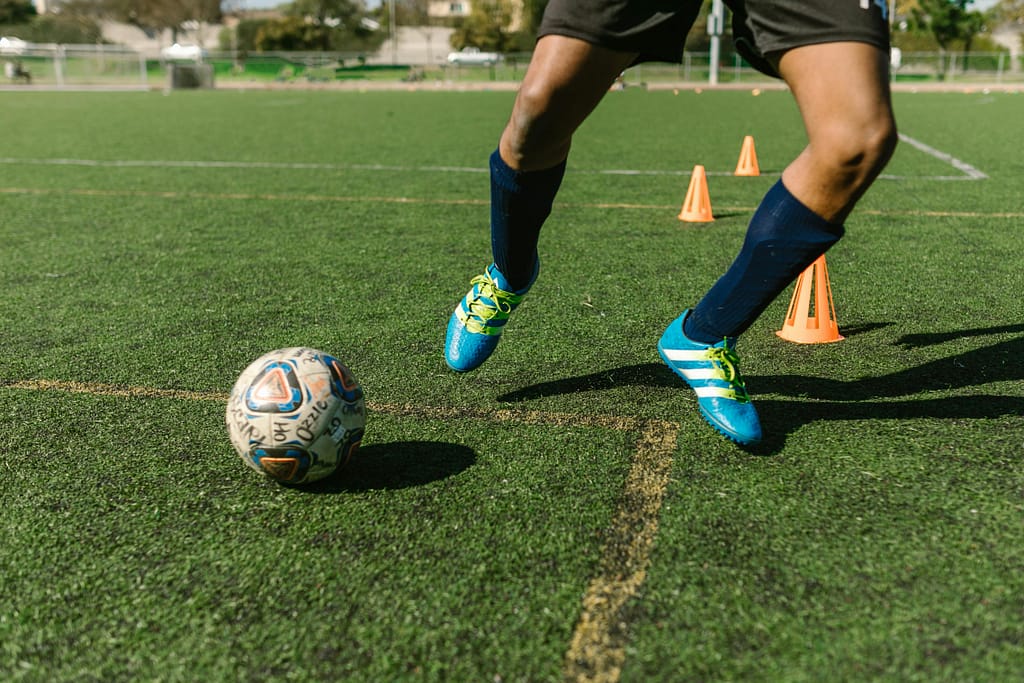
Advanced Drills (Game-Speed Replication)
Ickey Shuffle With 180° Turns
Perform the icky shuffle, then rotate 180° at the end of the ladder.
Soccer application: receiving the ball, turning under pressure.
This is a staple in advanced soccer ladder drills.
Single-Leg Hops
Hop through the ladder on one leg only.
Soccer application: explosive acceleration and jumping power.
This is a brutal but effective single leg shuffle drill for strength and control.
Zigzag Lateral Runs
Sprint diagonally through the ladder, cutting aggressively.
Soccer application: defensive recovery runs and attacking cuts.
Excellent for soccer directional change drills.
Random Pattern Reaction Drills
The partner calls out patterns or directions mid-drill.
Soccer application: reading unpredictable game situations.
This enhances soccer reaction drills and decision-making speed agility ladder drills.
Progressive Training Plan (4-Week Program)
Weeks 1–2:
Foundation drills. Focus on form and coordination.
Weeks 3–4:
Add intermediate drills. Increase speed.
Weeks 5–6:
Advanced drills at game tempo.
Week 7+:
Maintenance and variation.
This structure forms a complete agility ladder training program.
Combining Agility Ladders With Soccer Training
Use ladders before practice for neural activation. Follow immediately with ball work this is where transfer happens. Pair with plyometrics sparingly.
Overtraining kills speed. Recovery matters.
Equipment You Actually Need
Standard agility ladder (15–20 feet)
Flat surface
Optional cones
Budget options work.
DIY tape ladders are fine for soccer ladder workout sessions.
Frequently Asked Questions
Are ladder drills enough to improve soccer agility?
No. They’re a tool, not the entire toolbox.
Can beginners use agility ladders?
Yes, beginner soccer ladder drills are ideal for learning coordination.
Should ladders include the ball?
Eventually. Soccer ladder drills with the ball improve transfer.
How often should players train ladders?
2–3 times per week is optimal.
Are ladders better than cone drills for soccer?
They complement each other. Use both.
Conclusion
Agility ladders don’t make players great, consistent, intentional training does. But when used correctly, agility ladder drills for soccer sharpen the footwork that separates average players from elite ones. These tools are fundamental to soccer agility training and help develop the quick feet necessary for success on the field agility ladder drills.
Soccer footwork drills build more than speed they develop coordination, balance, and explosive power that translate directly to game situations. Whether you’re working on lateral movement, change of direction, or multi-directional speed, the ladder becomes your blueprint for improvement. Fast footwork drills condition your nervous system to fire faster, making split-second decisions instinctive rather than calculated.
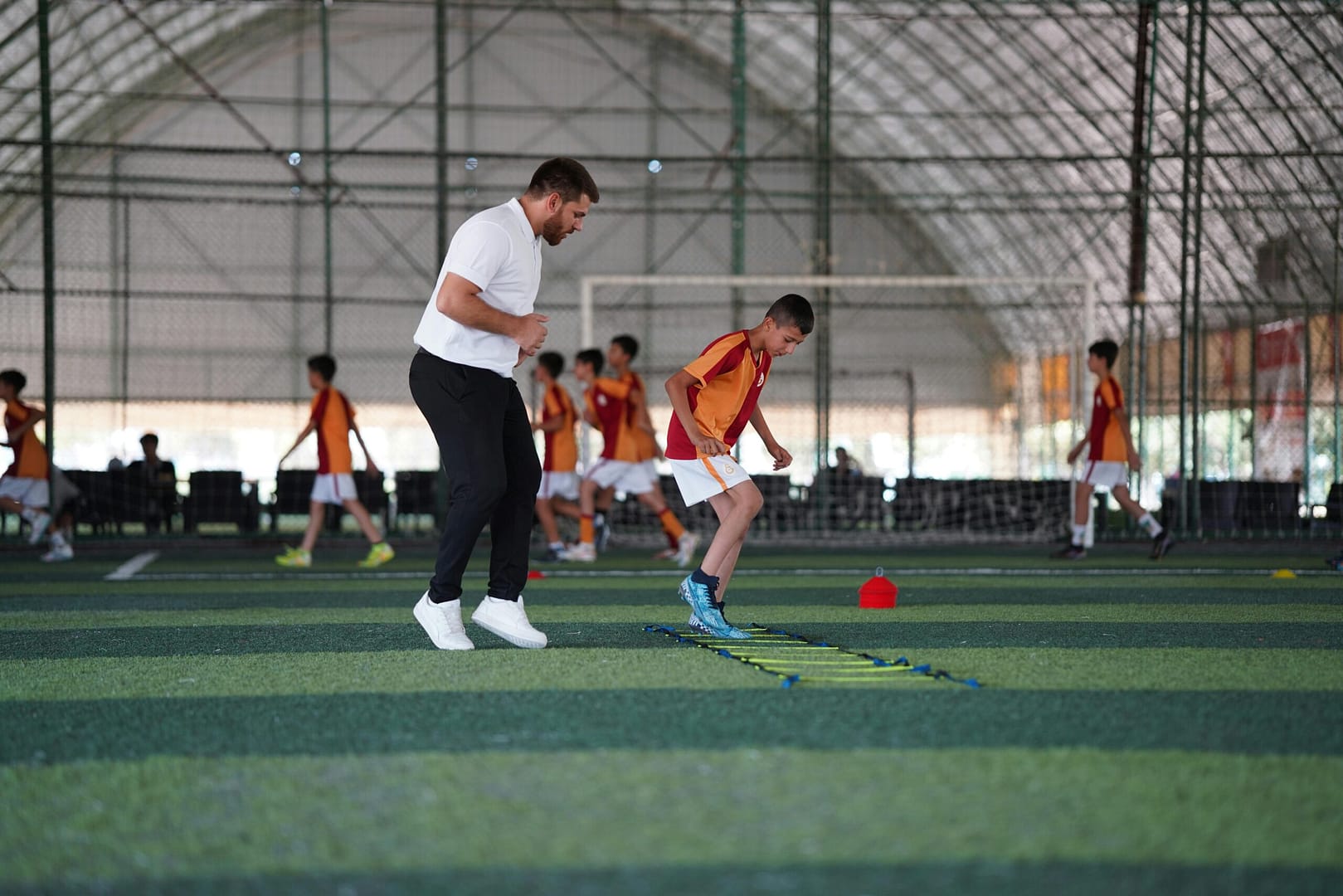
Start small. Three drills. Twice a week. Perfect the basics like in and outs, single leg shuffle, and lateral high knees before chasing complexity. Focus on soccer ladder training that emphasizes quality over quantity. Speed training for soccer isn’t about rushing through repetitions it’s about deliberate practice that builds muscle memory and technical precision.
Soccer conditioning drills using the agility ladder create athletes who move efficiently under pressure. Speed is built, not discovered. Commit to the process, master fundamental ladder drills for soccer, and watch your field positioning and ball control transform through dedicated athletic drills.