
Let’s get something straight before we waste each other’s time. Most soccer beginners don’t lose the ball because they’re slow, unfit, or unlucky. They lose it because their first touch is trash. The ball comes in, bounces five yards away, panic sets in, and boom possession is gone in under two seconds. If that stings, good. It should or learn more about it on goalnyx.
This is the brutal truth: the first touch is the separator. It’s the line between recreational chaos and actual soccer. You can run all day, know every “cheat” from first touch soccer 2015 download for Android, or watch highlights until your eyes bleed. None of that matters if your first contact with the ball betrays you.
This article delivers exactly what you need and nothing you don’t: eight progressive first touch drills for soccer that actually work, not Instagram fluff. You’ll also learn the common mistakes that keep beginners stuck forever and a practice framework that forces improvement.
Master these soccer drills for first touch, and you’ll stop looking like a deer on ice when the ball comes your way. Ignore them, and accept your fate as the player teammates avoid passing to.
Why First Touch Is Non-Negotiable for Beginners
Here’s reality: a good first touch doesn’t look flashy, but it controls the game. When your first touch is solid, the ball stays within playing distance not five yards away like a scared kid just kicked it. It sets up your next move instead of forcing you into panic mode, and most importantly, it buys you time under pressure. Time is oxygen in soccer. Without it, you suffocate.
Now the cost of a bad first touch? It’s brutal. You become a turnover machine. Your teammates notice yes, even if no one says it out loud. They stop passing to you because passing to you feels like donating possession. You spend entire games chasing your own mistakes instead of playing soccer. Studies at youth and amateur levels consistently show that players with poor first touch complete up to 40% fewer passes. That’s not bad luck, that’s incompetence.
Let’s clarify something beginners constantly misunderstand. “First touch” is not just stopping the ball. That mindset is weak. First touch means your initial contact controls direction, pace, and sets up your next action pass, dribble, or shot. If your touch kills the play instead of advancing it, you’re doing first touch drills soccer wrong.
Whether you’re doing first touch soccer drills for beginners, first touch drills for youth soccer, or even first touch soccer drills for high school, the principle is identical. Control first, then play. Anything else is just noise.
The Foundation: Body Position and Preparation
Before you even touch the ball, your body has already decided whether the play succeeds or fails. This is where most beginners mess up badly. Body position before the ball arrives matters more than the touch itself. If you’re square to the passer, hips locked, options limited you’ve already lost.
You need an open body stance. That means your hips are facing where you want to go next, not where the ball is coming from. Think 45 to 90 degrees open. This single adjustment instantly gives you more passing lanes, better vision, and smoother touches. Add to that checking your shoulder. If you’re not scanning before receiving, you’re playing blind. Period.
Then there’s balance. Being flat-footed while waiting for the ball is amateur hour. Stay on your toes, light and ready, not like you’re waiting for a bus. Good soccer drills to work on first touch always emphasize readiness, not just contact.
Mentally, this is where beginners collapse. Most stare at the ball in flight like hypnotized rabbits. That’s useless. You should scan first, decide your next move, then take a final glance at the ball before contact. “Hope and pray” is not a first touch strategy. Preparation turns chaos into control, whether you’re training first touch drills for soccer at home or on a full field.
Eight First Touch Drills That Actually Build Skill
Drill 1: Wall Pass and Control
This is the backbone of all football first touch drills. Setup is simple: you, a wall, one ball, standing 5–7 yards away. Pass the ball against the wall and control the rebound using different surfaces inside foot, outside foot, and sole.
Why it works is obvious. The wall gives immediate feedback and unpredictable rebounds, forcing constant adjustment. It’s one of the best soccer drills for first touch because it removes excuses. No partner? Too bad. The wall is always available, making it perfect for first touch drills for soccer at home.
Progress by varying pass power, adding movement before controlling, and using both feet equally. Reps matter here 50 touches per surface. Yes, 50. If that sounds like too much, congratulations, you’ve identified why your first touch still sucks.
Drill 2: Cone Gates Reception
Set up five small cone gates, about two feet wide, scattered in a 10×10 yard area. Toss the ball to yourself, control it, and dribble through a gate. Repeat until your legs burn.
This drill forces directional control and intentional touch. You’re not just stopping the ball, you’re moving it somewhere specific. That’s the difference between random touches and real soccer first touch drills.
To progress, shrink the gates, toss faster, alternate feet, or even add a second ball. Aim for 20 successful gate entries per session. The most common mistake? Beginners control the ball first and then look for a gate. Wrong. You should know where you’re going before the ball touches your foot. That’s how elite youth soccer drills for first touch are taught.
Drill 3: Moving Reception Drill
Soccer is not played standing still, yet beginners train like statues. This drill fixes that. Set up with a partner or wall 10–15 yards away. Jog laterally, receive the pass while moving, control into space ahead of you, and return the pass.
This drill works because most game situations involve movement. Standing still is fantasy soccer. Progress by increasing speed, varying pass height, or changing direction after controlling. Complete 30 receptions, alternating directions.
The key focus? Your first touch should propel you forward, not kill your momentum. This drill bridges the gap between static drills for first touch soccer and real match play.
Drill 4: Cushion Control (Killing the Ball)
This drill is about handling power. Have a partner pass balls at varying speeds and heights. Your job is to absorb the ball’s energy inside the foot, thigh, chest, or sole and bring it under control.
Why it works: it teaches you to adjust touch based on pass velocity. Not every pass is soft. If you can’t kill a hard pass, you’ll panic every time the game speeds up. Progress with harder passes, aerial balls, and 360-degree movement after control.
Aim for 40 total touches across all surfaces. This drill is essential in first touch soccer drills for high school, where pass speed increases fast.
Drill 5: Two-Ball Rapid Fire
This one exposes weakness fast. Partner stands eight yards away with two balls. They serve balls in quick succession, about every three seconds. You control and return each one.
This drill builds reaction speed and forces efficiency under pressure. Progress by shortening intervals, serving to random sides, or adding movement. Complete three sets of 20 touches.
Warning: this drill will make you uncomfortable. Good. Growth lives there. It’s one of the most effective soccer drills for better first touch when pressure is the problem.
Drill 6: Directional Touch Drill
Set four cones in a square, five yards apart. You stand in the middle. As the partner passes the ball, they call out a cone. Your first touch must go toward that cone.
This simulates game decision-making. You process information and execute simultaneously. Progress by speeding up calls, adding passive defenders, or using only your weaker foot. Complete 25 successful directional touches.
Hesitation kills this drill and it kills you in games. This is advanced soccer first touch drill thinking, not beginner panic.
Drill 7: Sole Roll Reception
This drill adds deception. Use a self-toss or partner serve. Trap the ball with the sole and roll it in one motion to change direction.
It works because it creates space from imaginary defenders and improves comfort on the ball. Progress by rolling faster, adding feints, or combining with turns. Do 30 sole rolls per foot.
Truth bomb: this looks cool but is useless if you can’t do basic inside-foot control first. Don’t let style distract you from substance, no matter how many cheats for first touch soccer you’ve Googled.
Drill 8: Game-Speed Pressure Drill
This is reality. Use a 10×10 yard area. A partner acts as a passive defender, standing 2–3 yards away. Receive passes, control away from pressure, and make your next pass.
This drill works because it’s the closest thing to real games without full chaos. Progress to active defending, smaller spaces, or one-touch limits. Train for 15 minutes continuously.
Bottom line: if you can’t handle this, you’re not ready for games. This is where all first touch drills for soccer either pay off or expose you.
Common First Touch Mistakes That Keep You Stuck
Mistake number one: watching the ball in flight instead of scanning. This makes you a sitting duck. Fix it by scanning early, glancing at the ball, scanning again, and taking one final look before contact.
Mistake two: square body position. Closed hips mean limited options, basically nothing but backward passes. Open your hips 45–90 degrees every time you receive.
Mistake three: inconsistent touch pressure. Too hard and you’re chasing your own touch like an idiot. Too soft and the ball sits there begging to be stolen. The fix is deliberate practice varying touch weight in all soccer drills for first touch.
Mistake four: using only one foot or surface. Right-footed players who avoid their left are half-players. Force alternation in every drill, especially in first touch drills for youth soccer.
Mistake five: no movement after the touch. You control the ball, then stand there admiring it. Every first touch should include an immediate next action. Control is useless without intent.
Building Your Practice Routine
If you’re serious, here’s what actually works. Train three to four times per week minimum. Twice a week won’t cut it. Each session should include 20–30 minutes of focused first touch work. Mix solo work with partner drills, and yes, walls count as partners.
A sample 30-minute session looks like this:
– 5 minutes wall work warm-up
– 10 minutes two high-volume drills
– 10 minutes game-speed pressure drill
– 5 minutes weak-foot-only work
Track progress brutally. Video yourself monthly you’ll hate watching it, which means it’s working. Count successful touches versus failures. Increase difficulty only when you hit an 80% success rate.
Timeline reality check: two to three months of consistency equals noticeable improvement. Six months equals a solid first touch under moderate pressure. If nothing changes in three months, you’re practicing wrong full stop.
Frequently Asked Questions
How long does it take to develop a good first touch as a soccer beginner?
With consistent practice (3-4 sessions per week, 20-30 minutes each), most beginners see noticeable improvement in 2-3 months. A solid, reliable first touch under game pressure typically takes 6-12 months of dedicated training. The key isn’t time – it’s volume and quality of touches. If you’re half-assing your drills, double these timelines.
Can I practice first touch drills alone without a partner?
Absolutely – wall work, self-tosses, and cone drills don’t require a partner. A wall is actually better than a mediocre partner because it’s consistent and always available. That said, you NEED partners and pressure drills eventually because soccer isn’t played against walls. Solo work builds the technique; partner work builds game application.
What part of my foot should I use for first touch control?
Inside of the foot is your bread and butter for most situations, largest surface area, most control. Outside of the foot for directional changes away from pressure. Sole for trapping and quick direction changes. Bottom line: You need all surfaces in your toolbox. Players who only use one surface are predictable and easy to defend.
Why does my first touch work in practice but fail in games?
Because practice without pressure is fantasy. You’re probably doing drills at 50% game speed with no defensive pressure and plenty of time to think. Games are chaotic. Solution: Add pressure, speed, and decision-making to every drill. Make practice harder than games, and games become easier.
Should beginners focus on first touch or dribbling first?
First touch, no question. Dribbling is worthless if you can’t receive the ball cleanly in the first place. You’ll spend entire games chasing bad touches instead of dribbling past anyone. Master first touch, then dribbling becomes exponentially easier because you’re starting each possession in control instead of panic mode.
Conclusion
First touch isn’t talent. It’s repetition, preparation, and brutal honesty about where you suck. Every first touch drills for soccer program works the same way: do the basics correctly, thousands of times.
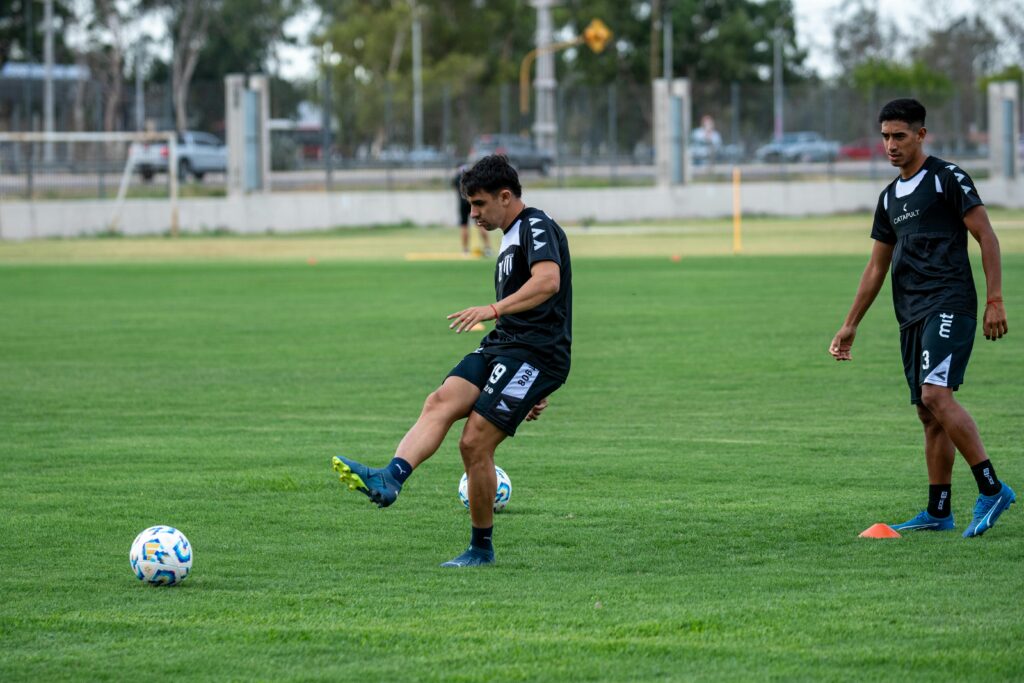
These soccer drills for first touch and drills for first touch soccer aren’t magic, but they are proven. Whether you’re using first touch soccer drills for beginners, first touch drills for youth soccer, or even first touch soccer drills for high school, the rule doesn’t change, show up and put in the reps.
Here’s the challenge: pick three soccer first touch drills, train them four times this week, and don’t skip reps. Most players won’t. They’ll read about soccer drills for better first touch, nod along, maybe save a link to the best soccer drills for first touch, then never touch a ball. Those players stay average forever.