
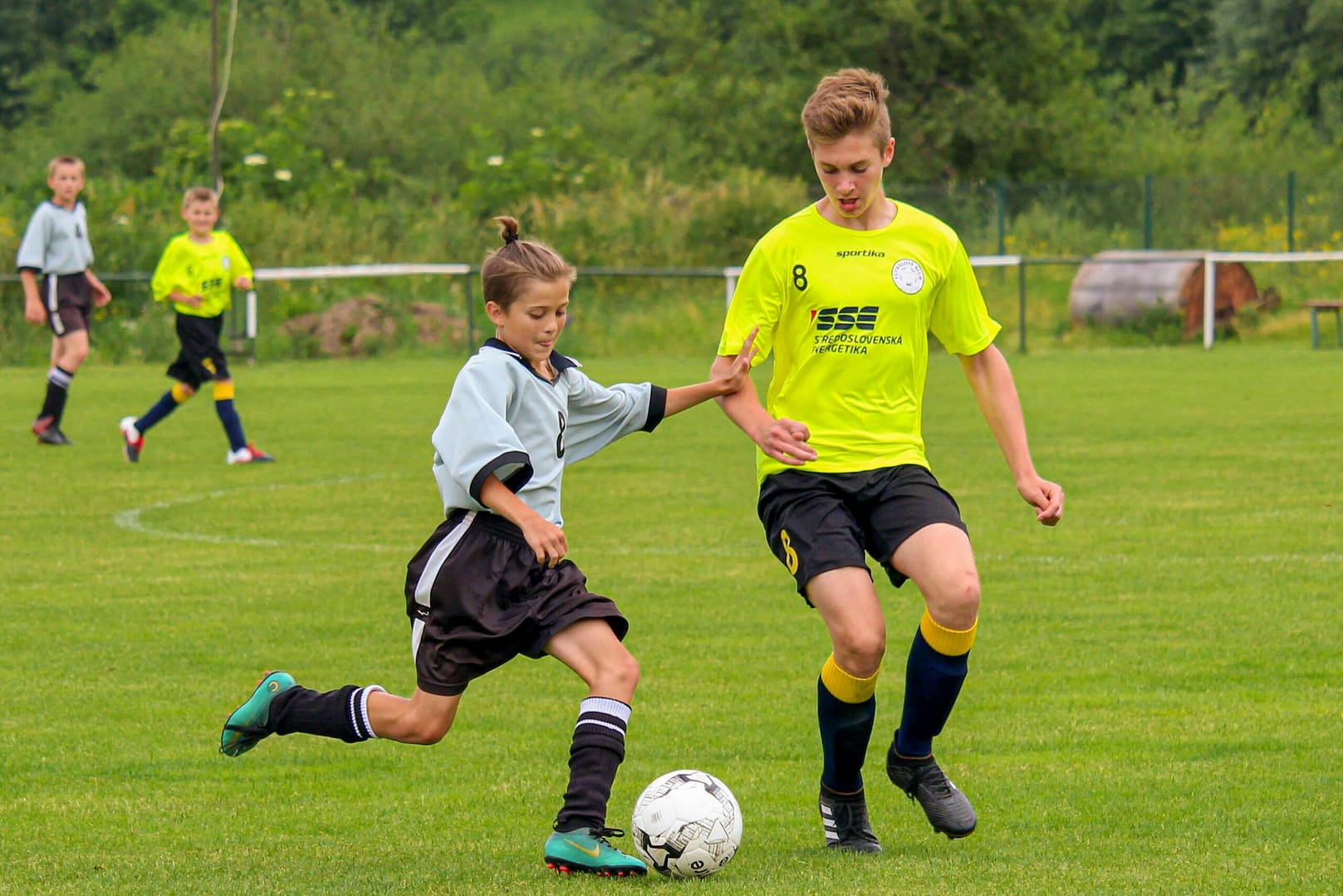
Traditional full-field training for young players often fails. Kids stand around, touch the ball maybe once every few minutes, and boredom kills development. Small-sided games fix that by putting players in tight, meaningful situations where every touch matters. These games increase engagement and accelerate player development by amplifying decision speed, improving technical skills, and teaching basic space management or good soccer coaching.
For ages U6–U14, SSGs deliver tactical, technical, and physical benefits: more ball time, more decisions, and more meaningful movement. Coaches who switch from rote drills to deliberate small-sided play see faster skill acquisition, higher player engagement, and better game intelligence on match day and learn more on goalnyx.
What Are Small-Sided Games in Youth Soccer?
Small-sided games shrink the field and reduce player numbers to create intense, game-like scenarios that prioritize learning. Core principles include maximizing touches, simplified rules to highlight objectives, and using constrained spaces to encourage quicker decisions and sharper technique.
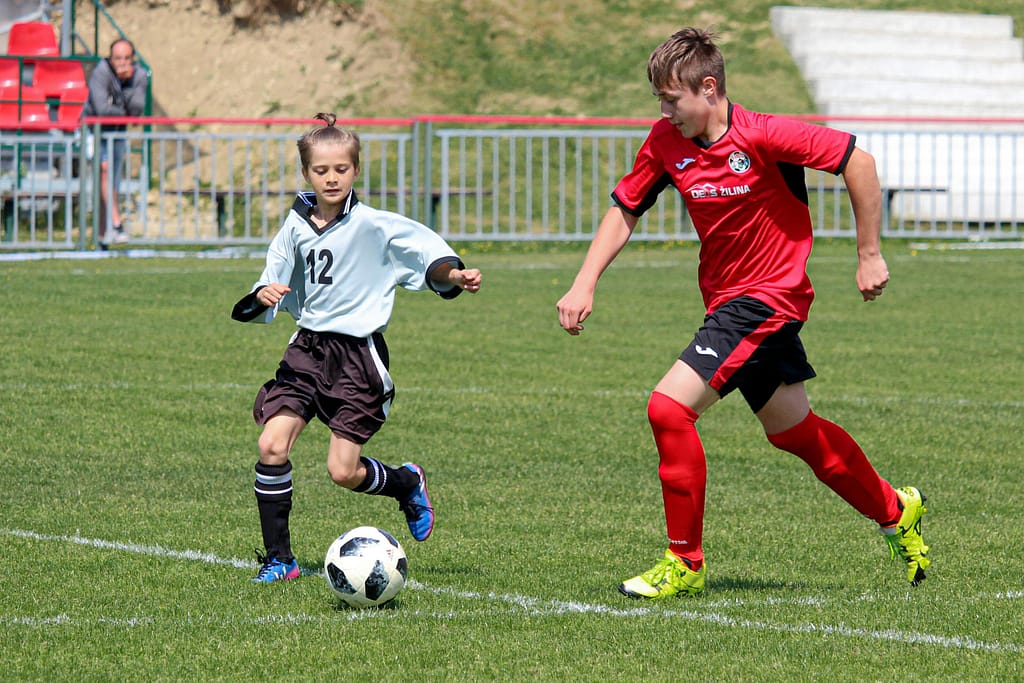
Unlike full-field 11v11, SSGs alter player ratios and field dimensions to increase involvement; for example, a 4v4 game on a compact grid produces far more interactions per player. Governing bodies and coaches favor SSGs because they reflect emergent play conditions and nurture tactical awareness organically. The touch-frequency advantage is dramatic: in certain formats players can experience up to 600% more touches in 4v4 than in 11v11, which directly boosts ball possession comfort, passing techniques, and movement patterns.
Science-Backed Benefits of Small-Sided Games
Small-sided games deliver measurable technical development through increased ball contacts per session, forcing players to make skilled choices under pressure. That repeated exposure improves first touch, passing accuracy, and overall technical skills, while promoting skill transfer to match situations. On the tactical side, SSGs teach players to read space, react to transitions, and develop pattern recognition core components of game intelligence and tactical flexibility.
Physically, the intermittent high-intensity demands of SSGs build soccer-specific endurance and speed via natural play, improving soccer conditioning without monotonous drills. Psychologically, SSGs increase involvement and confidence; small groups reduce fear of failure and promote faster learning cycles. This combination fosters both cognitive development and motor proficiency, making SSGs a superior method in modern soccer pedagogy.
Age-Appropriate Small-Sided Game Formats
For U6–U8, use 3v3 or 4v4 on very small fields with tiny goals and no goalkeepers. These formats emphasize basic ball control, simple passing, and early spatial awareness. Keep sessions short, rotate players frequently, and prioritize fun while reinforcing soccer fundamentals like dribbling and safe receiving.
For U9–U10, move to 5v5 or 6v6, introduce slightly larger goals, and begin teaching width, depth, and basic support play. This stage focuses on positional play and refined passing techniques. You can add light restrictions such as two-touch limits to encourage quicker decision making and develop decision making under pressure.
At U11–U12, 7v7 provides a bridge toward structured formations; players learn balance between freedom and tactical discipline, experience role-based responsibilities, and benefit from targeted coaching of movement patterns and team dynamics.
For U13–U14, 9v9 approximates full-field dynamics while still maintaining high touch rates. This stage introduces advanced concepts like pressing triggers, compactness, and transitional play, all aimed at boosting tactical awareness and ensuring smooth training progression toward 11v11.
10 High-Impact Small-Sided Games for Youth Development
Game 1: Four Goal Game (4v4)
Setup: Four small goals placed at each side of a square. Play 4v4; teams attack any goal. Objective: Create scanning and switching play. Coaching points: Encourage quick switching of play, look for overloads, and reward forwards who press. This game develops ball possession under shifting pressures and improves lateral movement patterns. Progression: Limit touches to two to force faster passing and decision making.
Game 2: End Zone Game (5v5)
Setup: Small rectangular field with end zones behind goals. Score by carrying or passing into the end zone. Objective: Promote penetration and support runs. Coaching points: Teach timing of runs and body positioning for receiving. This builds passing techniques and improves space management. Progression: Add a neutral player to create overloads.
Game 3: Counter-Attack Game (6v6)
Setup: Medium field with small goals; after a turnover, the attacking team attempts a quick counter. Objective: Train transitional speed and recovery. Coaching points: Emphasize quick forward passes, sprint triggers, and immediate defensive recovery. This game enhances tactical awareness and reactive decision making. Progression: Introduce a stop clock to reward rapid counters.
Game 4: Possession to Target (4v4+2)
Setup: 4v4 play inside grid with two neutral target players outside acting as outlets. Objective: Build out from possession to target players. Coaching points: Focus on angles of support, weight of pass, and safe switch play. This format boosts team dynamics and skill transfer for build-up phases. Progression: Make targets active defenders after set time to force circulation.
Game 5: Scoring Zones Game (5v5)
Setup: Field divided into thirds with scoring worth more in final third zones. Objective: Reward teams who progress through phases with structured possession. Coaching points: Teach patience, tempo control, and timing of the final pass. This develops game intelligence and encourages structured positional play. Progression: Assign bonus points for weak-foot finishes to promote balanced skill development.
Game 6: Numbers-up/Numbers-down Scenarios
Setup: Create 3v2 or 4v3 edges within a larger grid. Objective: Train overload exploitation and defensive compactness. Coaching points: Teach quick recognition of mismatches and support angles. Progression: Rotate attackers and defenders frequently to expose all players to both sides of the scenario.
Game 7: Directional Play Games
Setup: Teams aim to carry the ball through the end gate after a given number of passes. Objective: Encourage forward thinking and purposeful possession. Coaching points: Stress vertical passing lanes, timing, and penetration. Progression: Limit touches or require a minimum number of passes before scoring.

Game 8: Chaos Games for Decision-Making
Setup: Large group within a confined area with multiple small goals or scoring targets. Objective: Force rapid cognitive processing and off-ball movement. Coaching points: Encourage scanning, communication, and risk-taking. Progression: Reduce space or increase defensive pressure to raise cognitive load.
Game 9: Position-Specific Small-Sided Formats
Setup: Design grids that favor certain positions (e.g., wing play or central combinations). Objective: Reinforce role-specific actions like overlapping runs or defensive rotations. Coaching points: Emphasize repetitive scenarios that mimic match duties. Progression: Add conditioned constraints to replicate match fatigue.
Game 10: Conditioned Games with Restrictions
Setup: Any SSG with deliberate rules (e.g., two-touch, must play one pass back each sequence). Objective: Target specific coaching outcomes like tempo control or circulation. Coaching points: Keep restrictions purposeful and age-appropriate. Progression: Gradually remove restrictions as learning consolidates.
Each game requires clear setup, a single primary objective, focused coaching points, and at least one progression to scale difficulty. Diagrams can be simple sketches: mark grids with cones or natural landmarks, place mini-goals or cones to indicate scoring zones, and label neutral players. The point is deliberate practice through engaging, competitive formats that advance player development and competitive learning.
Common Coaching Mistakes in Small-Sided Games
Over-coaching during play kills learning; let players experience and solve problems before you interject. Inappropriate restrictions can stifle creativity and turn games into meaningless drills. Poor team balancing leads to blowouts that crush confidence; rotate players and manage matchups to keep games competitive.
Coaches often fail to understand when to freeze the play for a short teachable moment and when to trust the flow. Treating SSGs as purely fun without deliberate objectives wastes time; each game must target clear outcomes in skill acquisition and tactical awareness. Finally, ignoring individual needs during chaotic play leaves weaker players behind and uses targeted progressions and extra touches to close gaps.
How to Structure Small-Sided Game Sessions
Integrate a dynamic warm-up that mirrors game actions and primes neuromuscular systems for high-intensity shifts. Use age-appropriate work-to-rest ratios shorter, more frequent work bouts for younger players, longer tactical sequences for older youth. Intervene sparingly: pause for one focused coaching point, then restart to test learning with drills.
Rotate players through roles to ensure exposure across positional play and maintain intensity by limiting rest between small-sided bouts. Finish with a cool-down and quick reflection where players state one learning point, reinforcing cognitive development and embedding lessons.
Frequently Asked Questions
How often should youth teams use SSGs?
Use SSGs in most sessions and aim for at least 60–80% of training time devoted to game-based learning for optimal player development.
When should coaches introduce restrictions like two-touch limits?
Introduce restrictions once basic technique is reliable; use them as short progressions to accelerate skill acquisition without killing creativity.
How do I keep games balanced?
Rotate players, mix abilities across teams, and adjust goals or handicaps to prevent blowouts and preserve confidence and learning.
Are SSGs safe for player conditioning?
Yes SSGs build sport-specific intensity gradually and reduce repetitive load, aiding injury prevention while improving soccer conditioning when sessions are well-structured.
How do I measure progress from SSGs?
Track touch counts, successful passes, recovery speed in transitions, and observational markers like decision quality and spatial use to quantify improvements in game intelligence and technical skills.
Conclusion
Small-sided games replace boring drills with real play that speeds up both technical and tactical growth. Choose one SSG from the plan and run it this week with a clear objective whether improving passing, encouraging quick transitions, or teaching support angles.

Set measurable targets like number of successful passes, touches per player, or time to complete a counter-attack. Keep sessions age-appropriate: younger players need smaller fields, shorter bouts, and simpler rules while older youth can handle more structure and tactical constraints. Scale difficulty by adding touch limits, neutral players, or conditioned scoring zones so each player faces gradually harder challenges that match their development stage for soccer warm-up guide and more.
Structure the session deliberately: warm up with movement patterns that mirror the game, run multiple short SSG bouts with defined work-to-rest ratios, and pause only for one concise coaching point before restarting. Rotate roles and teams to ensure balanced exposure and prevent blowouts.
Track progress each week and adjust objectives when targets are consistently met. Consistent, focused SSG practice builds confidence, sharpens decision making, and improves ball skills faster than repetitive drills. Do it regularly, measure honestly, and demand effort. Small-sided play will produce smarter, more skilled players. No excuses.