

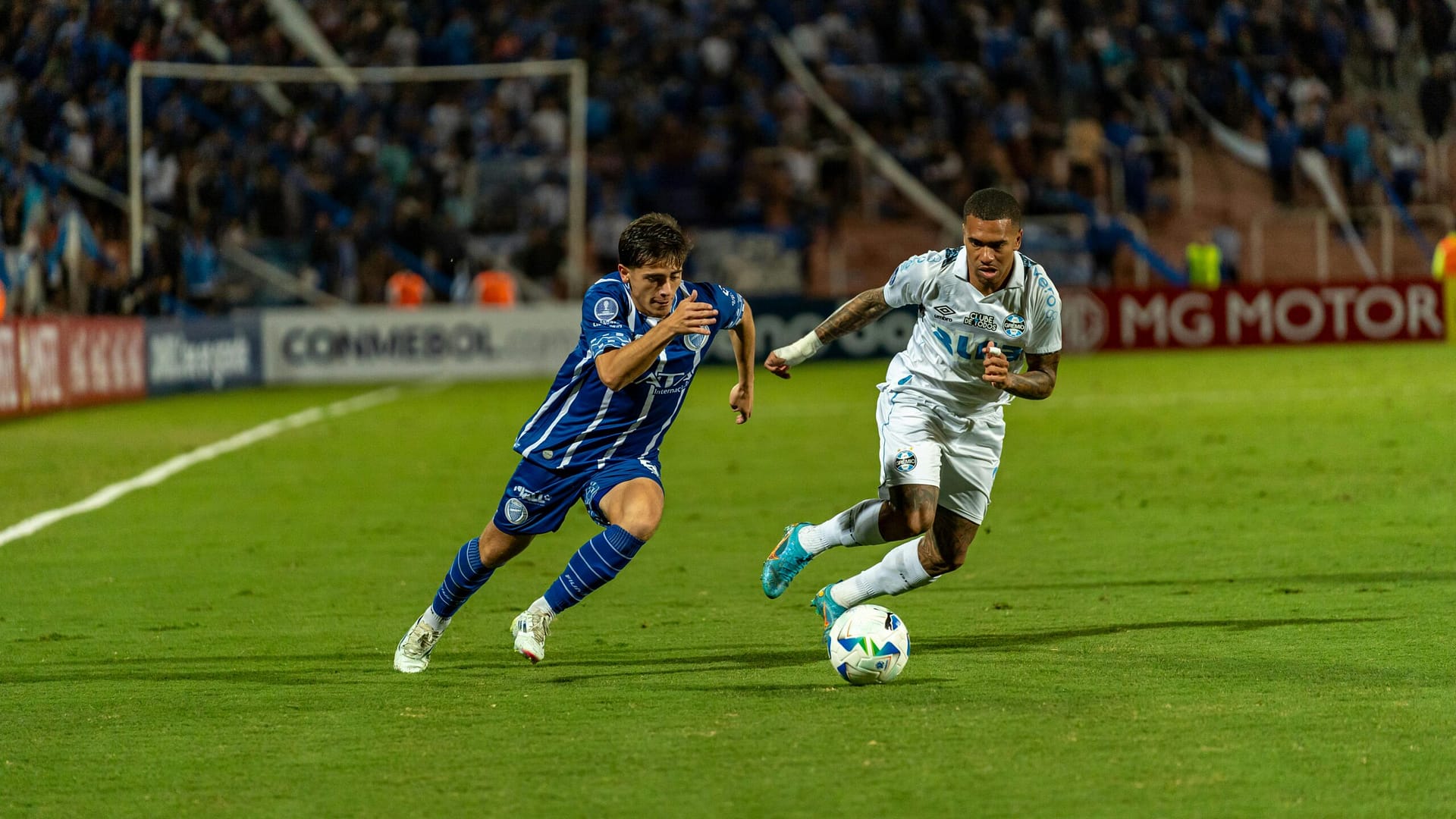
The difference between average and elite attackers isn’t just talent, it’s intelligent movement. Attacking movement drills are structured exercises that train forwards and wingers to exploit defensive weaknesses, develop timing, and coordinate with teammates so runs become purposeful, not random. Modern football demands constant off-ball intelligence; defenders rest less, spaces shift faster, and the team that moves smarter creates more chances or learn more about it on goalnyx.
This practical coaching article gives coaches and players a clear roadmap: progressive drills, precise coaching points, and measurable progressions to turn sloppy runs into repeatable, dangerous patterns. Expect drills that sharpen off-ball movement training, teach specific forward runs patterns, and refine striker positioning drills so your attackers start making the right decisions at the right time.
What Makes Attacking Movement Effective?
Attacking movement is effective when timing beats raw speed, because moving at the wrong moment just hands the defender an easy job. Timing versus speed is simple: a late, well-timed run into space destroys a slow track-back; a fast but early run is neutralized. Creating separation from defenders requires small variances in angle and pace, use feints, short checks, and sudden acceleration to open up half-steps.
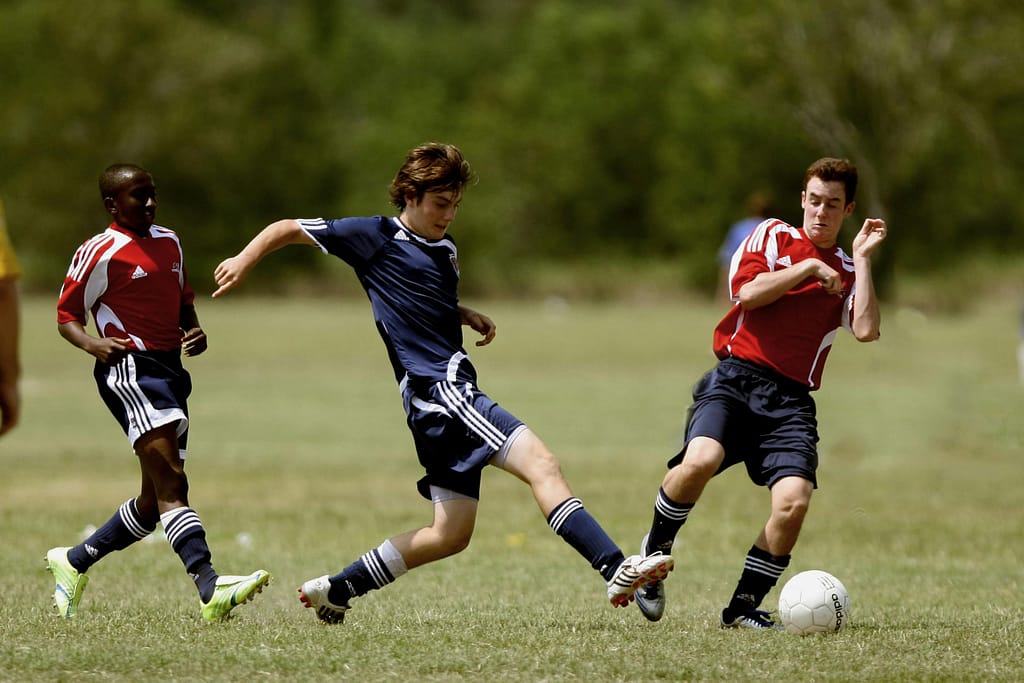
Reading defensive body shape is a fundamental skill defenders and attackers must train: if a center back shields a lane with his shoulder, the attacker must exploit the opposite channel or drop between lines.
The relationship between the ball carrier and off-ball attackers is symbiotic; the passer must disguise intent and the runner must anticipate service. Space recognition attacking space behind, between, and in front of defenders turns movement into options rather than habits. Remember the key principle: movement without purpose is just running. If your players sprinting around the pitch aren’t changing defensive structure or creating chances, the drill and coaching are trash.
7 Core Movement Patterns Every Attacker Must Master
Diagonal runs break defensive lines at angles that are harder to track than straight sprints. Diagonal running exercises teach attackers to use the width and depth of the pitch to cut across defenders and meet through balls or cutbacks. Use diagonals to distort defensive shapes; when a winger diagonally attacks the half-space, the fullback and center back must communicate or risk creating gaps.
Checking away and checking back are essential checking movements that create receiving pockets. By moving away from the ball, then quickly checking back into the space between lines, attackers force defenders to decide to follow and leave a gap, or hold and let the attacker receive. This is core to combination play training because it creates angles for quick one-twos.
Third man runs are often the difference-maker. Third man runs exploit blind spots and require coordination: the passer’s first action, a decoy second action, and the third attacker timing the run behind. These runs are lethal when defenders are pulled out of position by the initial interplay.
Overlap and underlap runs are basic but frequently misused. Proper overlap and underlap runs create width and overloads down the flanks, offering the ball carrier clear passing lanes or cutback options. Teach when to overlap for a crossing angle and when to underlap to attack the half-space closer to goal.
Counter-movements, the art of feinting one way and going another are fundamental to losing markers. They complement counter-attacking drills and help attackers exploit moments of chaos by disguising intention until the last moment.
Near post and far post runs are vital in crossing scenarios. Near post far post runs must be timed with crossing run timing so the crosser finds a moving target rather than a static player. Teach forwards to vary their depth to keep defenders guessing.
Dropping deep and spinning helps with link-up play. Forwards who can drop into the midfield and spin away create space for teammates to run in behind and improve overall forward link-up play. These rotations make defenses uncomfortable and open channels to score.
Game-Changing Attacking Movement Drills for Training
Drill 1: The Third Man Diamond
Set up a small diamond with three attackers and one defender inside, plus a neutral holder. The holder plays the ball to one attacker who moves it to the second; the third attacker times a third man runs to receive behind the defender. Execution requires continuous rotation after the third attacker receives, roles rotate. Coaching points: insist on eyes up before running, vary the first touch to disguise intent, and reward runs that exploit the defender’s blind side. Progressions: add a passive second defender, then a full defender who can intercept.
Drill 2: 3v2 Continuous Waves
On a 20x30m area, run continuous 3v2 waves where three attackers attack two defenders and must score in a small target. The attackers must use forward runs patterns and support play angles to overload and create chances. Execution focuses on timing of support, rotation of the third man, and exploiting numerical advantage quickly. Coaches should stress movement into the line of the pass rather than standing wide. Variations include limiting touches, forcing wide channels only, or adding a neutral wide player to practice width exploitation drills. Common mistake: attackers freeze into positions; the point is dynamic rotation and continuous movement to break defensive balance.
Drill 3: Diagonal Run Timing Gates
Create timing gates with cones representing defensive lines; attackers must time their diagonal runs to arrive at a gate as the pass is played. Start without defenders to lock the tempo, then add a defender tracking the runner. This drill trains diagonal running exercises and the synchronization between passer and runner. Execution should emphasize the last two steps before the pass shorten stride to collect the pass and beat the marker. Progressions: require a finish on goal from the run, or force the passer to disguise the through ball so runners must read cues.
Drill 4: Blind Side Runner
A 5v4 scenario with attackers allowed to rotate positions. Focus on blind side runs and breaking defensive lines by timing runs into pockets behind defenders. Attackers should alternate decoy runs to drag markers before the blind side runner attacks space. Rotation patterns test communication and patience: don’t overcommit on the first pass. This drill is garbage if runs are predictable and telegraphed teach runners to delay the final stride until the service begins.
Drill 5: Channel Exploitation Drill
Use a half-pitch with defined central channels; wingers and forwards practice channel running drills that combine width and depth to create crossing or cutback options. Setup includes a deep midfielder serving long passes and a fullback overlapping to stretch the defense. Execution demands coordination: the winger must decide to pin the fullback wide or cut inside, while the forward runs between center backs. Progress the drill by narrowing the channels to force quicker decision-making and emphasize depth creation exercises alongside width.
Drill 6: Box Movement Patterns
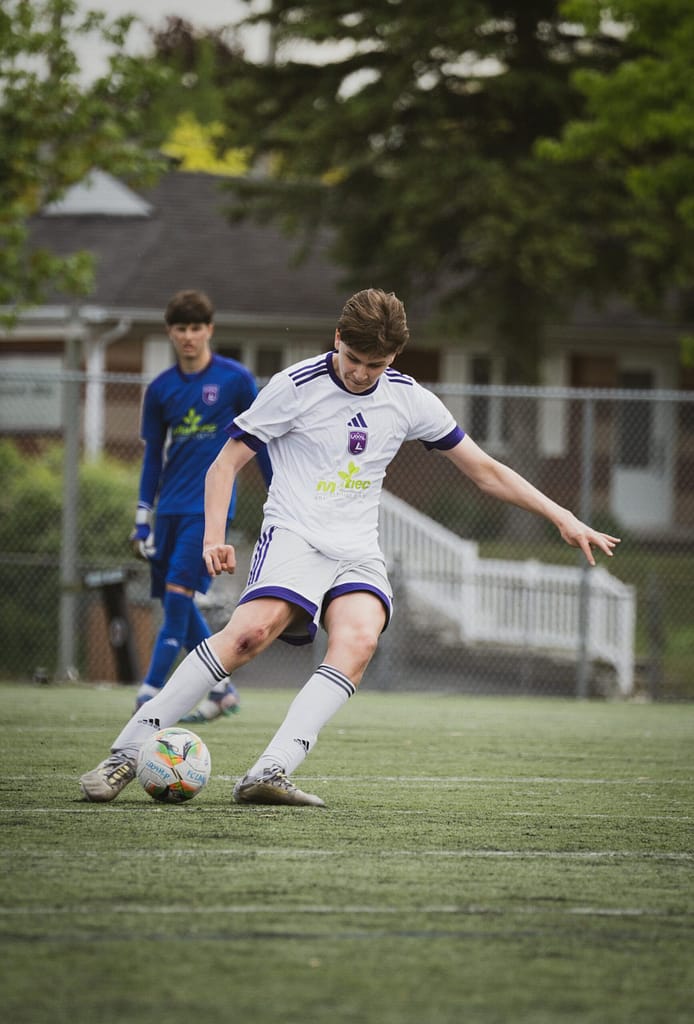
Inside the penalty area, set multiple service points and rehearse box movement patterns with attackers practicing near post far post runs and late arrival from the edge. Attackers must learn penalty area positioning, attacking the space rather than the ball, and timing their runs to the flight of the cross. Coaching the “attack the space, not the ball” mentality prevents simple collisions and increases goal scoring movement. Variations include defenders marking tight, zone defending, or live crosses from varying angles.
Drill 7: Counter-Movement 1v1+1
Set up isolated 1v1 battles with a supporting player to simulate a defender and a recovering teammate. The attacker practices checking movements and counter-movements to lose the marker, then links with the support for a shot. Emphasize deception, sell one movement, then explode the other way and the timing of the pass so the supporting player can exploit created space. Weak execution is usually caused by movement too early or too slow; forcing players to delay and read the defender.
Drill 8: Full-Phase Attacking Transition
Run 8v8 or 9v9 with immediate emphasis on attacking transition movement when possession changes. The exercise trains forwards to make immediate forward runs on turnover, exploiting disorganized defenses with attacking rotations and support play angles. Execution should mimic match tempo: after a turnover, encourage quick vertical passes and third-man support. Measure success by how many transitions produce shots or entries into the final third.
How to Coach Attacking Movement Effectively
Visual cues beat verbal overload.
Demonstrate a run, show the shoulder-check, then let players try. The shoulder check principle scanning before receiving must be drilled until it’s automatic; attackers should habitually check to identify the next passing lane or space to attack.
Use timing markers: teach “move when the pass is played, not before”; runners arriving too early are easily marked, arriving late miss the chance. Maintain optimal distance relationships; attackers should be close enough to combine but far enough to stretch the defense; this is the core of offensive spacing drills and off-ball movement training.
Apply constraint-based coaching: create small-sided games that force certain patterns (e.g., only one-touch in the half-space) so players discover effective forward link-up play themselves. Integrate video analysis to show professional examples of forward runs patterns and through ball anticipation, and break down why certain runs open space. Common coaching failures include overcoaching that creates robotic, predictable movements, not explaining why a run works (so players can’t adapt), and ignoring the ball carrier’s perspective; each of these results in movement that fails under pressure.
Programming Attacking Movement Drills into Training
Structure training across phases. Foundation phase (weeks 1–2) focuses on individual mechanics: timing of diagonal runs, basic striker positioning drills, and simple 1v1 deception. Combination phase (weeks 3–4) pairs players in small groups to practice combination play training, overlap and underlap runs, and linking patterns.
Integration phase (weeks 5+) places these patterns into full-team contexts and transition drills so attackers learn to perform under match-like constraints.
Place these drills after warm-up and before tactical scrimmage; intensity should climb through the session so players are practicing decision-making when partially fatigued; this mirrors match demands for final third positioning and penalty area positioning.
Frequency should be 2–3 times per week for retention; less is useless, more without variation is repetitive trash. Measure improvement by tracking successful runs leading to shots or chances, distance of space created in meters (use GPS if available), and defensive disruption metrics such as forced passes or mismatches created by space creation drills.
Why Your Attacking Movement Drills Are Failing
Your drill is trash if it lacks opposition, no defenders, no decision-making; add live defenders progressively. It fails if it’s too complex too soon; simplify patterns, lock tempo, then add layers. A drill that doesn’t transfer to game situations is wasted practice: always finish drills with an open-ended small-sided game to test learning. Mental engagement matters: if players treat the session as a chore they won’t improvise.
Many coaches don’t correct poor timing; that single mis-timed run ruins an attack. Movement becomes predictable when you repeat identical services every rep randomize service and insert competition to force adaptation. Fixes include adding defenders gradually, simplifying then building complexity, using transitions to small-sided games, creating competitive scoring incentives, filming sessions for review, and randomizing service to train anticipation and through ball anticipation.
Conclusion
Attacking movement drills are non-negotiable for modern forwards and wide players who want to consistently create and finish chances. The real separator is players who train movement intentionally mastering forward runs patterns, third man runs, and channel running drills versus those who merely run a lot without a purpose. Start with two or three core drills from this guide, insist on quality over quantity, and measure progress by how often movement leads directly to a shot or disrupted defense.