

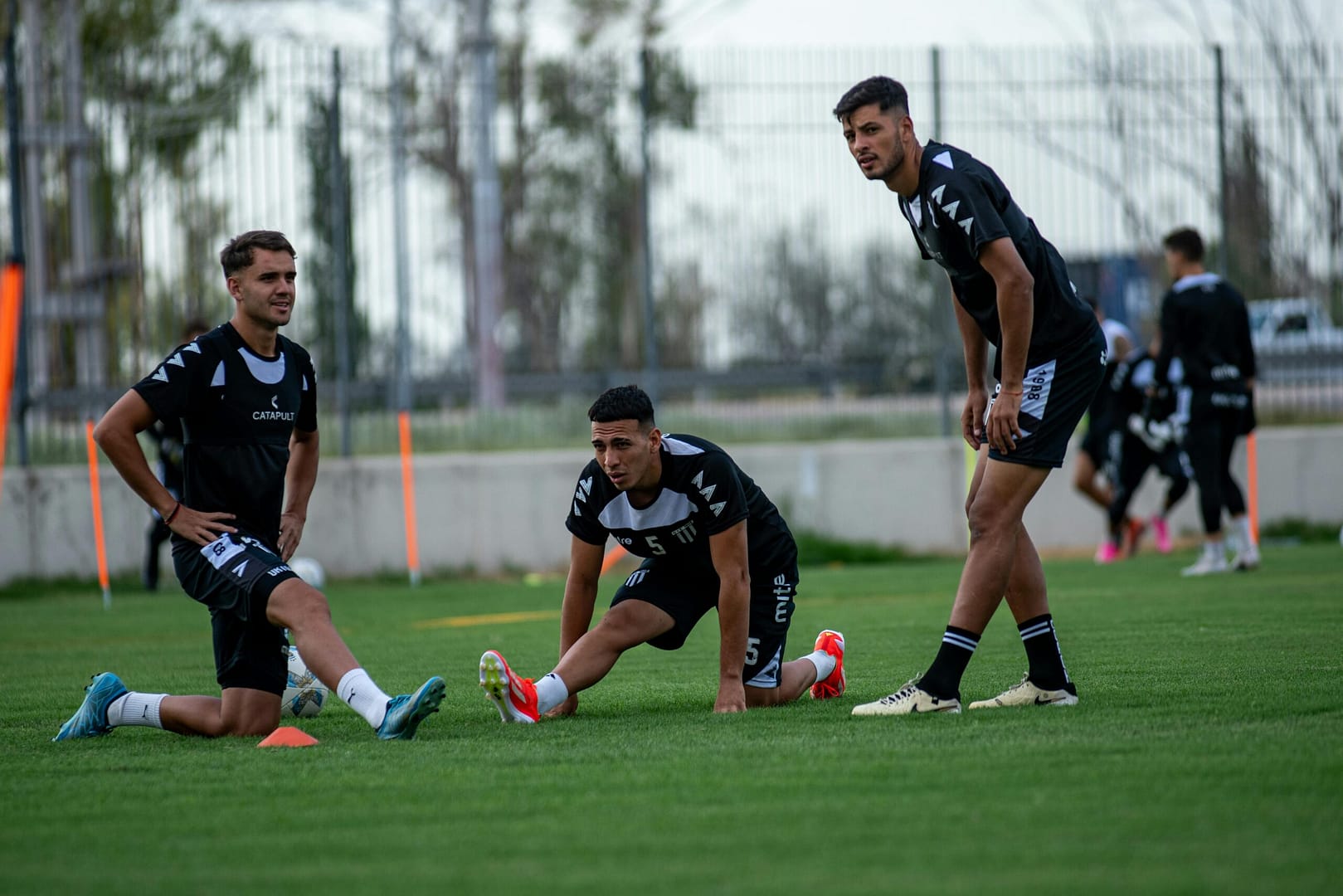
Most players think stretching equals touching toes for five seconds and they’re set. That’s trash and it’s why hamstrings pull, groins flare up, and seasons get shortened. The real problem is timing and intent: confusing a passive static hold with a targeted dynamic warm‑up or using generic routines that ignore soccer’s unique demands. This guide fixes that and learn more about these exercises on goalnyx.
You’ll get match‑day pre‑game routines, post‑game recovery protocols, and a practical plan to increase flexibility and range of motion without sacrificing power. These are the same, science-aligned methods used in professional academies: progressive activation for game speed, controlled static hold work for recovery, and mobility drills that preserve muscle elasticity and improve proprioception in stretching exercises. Don’t expect fluff.
Every exercise includes form cues, exact timing, and what it should feel like. If you’re still doing toe‑touches and calling it preparation, stop, we’re retooling your habits into a system that actually prevents injuries and boosts performance.
Why Soccer Players Need Sport‑Specific Stretching exercises
Soccer is not jogging in a straight line. Every action is sudden, multi‑directional and loaded so your mobility must be specific. Generic “athlete” stretches ignore the twist, sprint, and decelerate demands that produce most injuries. Good stretching trains tissues to handle the exact positions soccer throws at you.

The Biomechanics of Soccer Movement
Sprinting, planting, and cutting place massive eccentric loads on the posterior chain; that’s why hamstring strains are the most common muscle injury in the sport. Powerful shots and long passes demand coordinated hip extension and rotation; without adequate hip flexor and pelvic control your power leaks into compensations that stress the groin and lower back. Ball control relies on subtle ankle dorsiflexion and plantarflexion; the calf and Achilles must tolerate repeated push‑offs and quick stops. Simple static routines miss this specificity; soccer needs drills that load muscles through functional ranges such as loaded lunge patterns, multidirectional leg swing progressions, and reactive balance work that ties core activation to limb motion.
Injury Prevention Statistics
Data matters. Across professional and amateur cohorts, hamstring strains account for roughly 12–16% of all injuries; groin problems represent about 10–12% in male players and are one of the leading causes of time loss. Ankle sprains and hip flexor issues are also common, with ankle injuries causing an estimated 10% of match absence.
These injuries are often linked to deficits in eccentric strength, inadequate hip and groin range of motion, and poor proprioception. Stretching reduces injury risk by increasing tolerable length in muscle–tendon units, improving muscle elasticity, and by restoring balanced joint mechanics. But the mechanism matters: dynamic activation primes neuromuscular pathways and raises tissue temperature to reduce strain during high‑speed actions; appropriate post‑activity static work redistributes load, reduces passive tension, and accelerates recovery. If you can’t explain how a stretch changes tissue behavior under load, it’s window dressing.
Dynamic Stretching Protocol (Pre‑Training/Match)
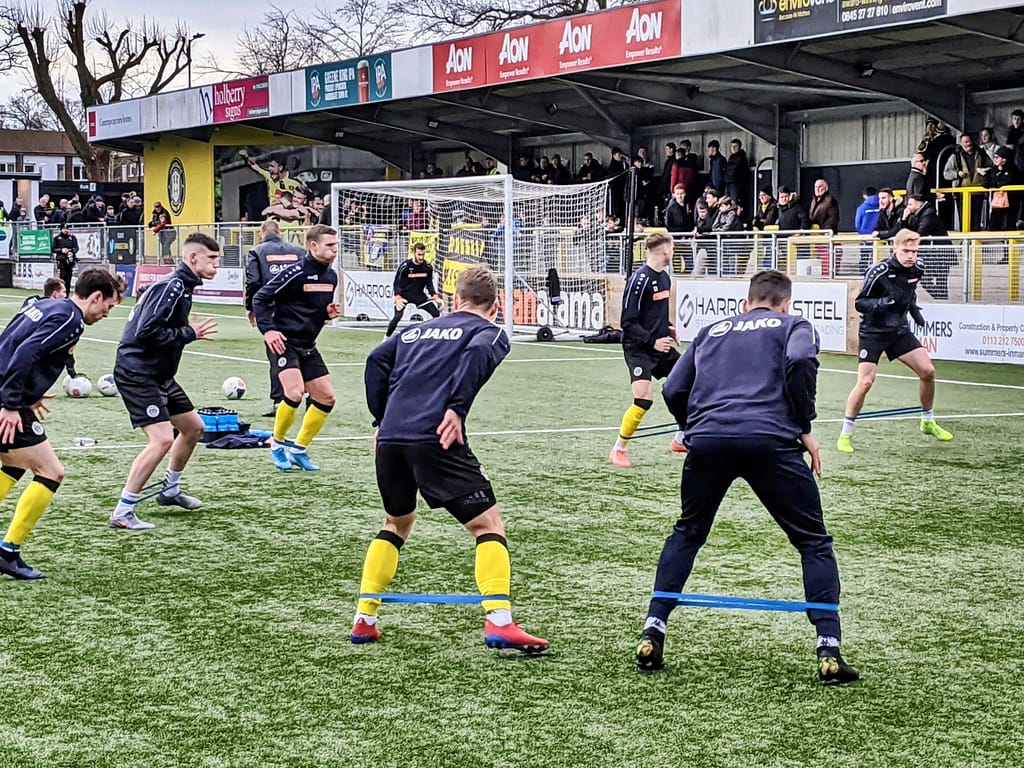
Dynamic work is the bridge between rest and maximum intensity. It increases blood flow, boosts nerve conduction, and wakes the motor patterns soccer requires. Execute this sequence as a progressive dynamic warm‑up starting low tempo and finishing at near‑game speed.
Lower Body Dynamic Stretches
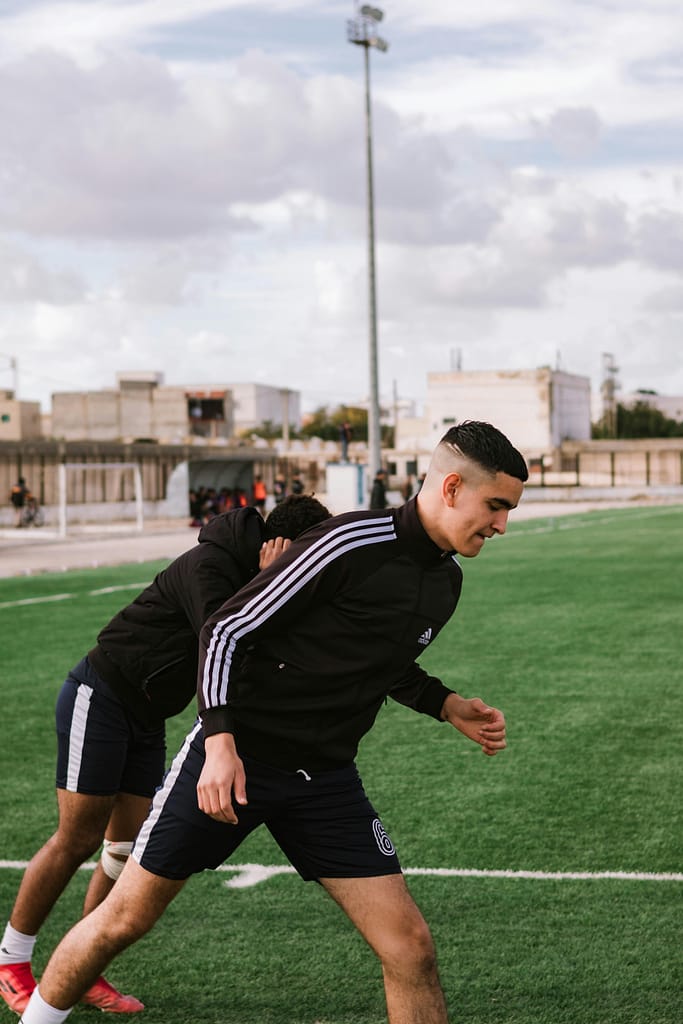
Leg swings: Front‑to‑back and lateral. Stand tall, support on one leg, perform controlled leg swing to chest height for 10 reps each side. Progress from small amplitude to full range does not yank.
Walking lunges with rotation: Step forward into a deep lunge, rotate the torso toward the lead leg’s knee to load hip rotators and adductor chains; 8 reps each side. High knees progression: Jog with exaggerated knee drive and quick ground contact for 20m, 2 passes.
Butt kicks with arm circles: 20m x 2, emphasize heel‑to‑glute contact to prime hamstrings and posterior chain. Lateral shuffles with arm movements and carioca/grapevine steps: 2 sets of 20m each to load transverse plane motion and ankle stability.
Form cues: Keep shoulders over hips, engage core activation, and avoid collapsing in the lumbar spine. Each movement should feel like acceleration rehearsal, not passive stretching.
Hip and Groin Activation
World’s Greatest Stretch progression: From standing lunge, place both hands on ground, bring elbow to instep, rotate torso up and reach overhead hold 2 seconds, repeat 6 reps per side. Hip circles/openers: 8 slow circles each direction, feel the joint cleaning through range.
Spiderman with rotation: Deep step forward, place opposite hand outside front foot, rotate to ceiling; 6 reps each side. 90/90 transitions: Sit with one hip rotated externally and the other internally; move smoothly between positions for 6 controlled reps. These drills prime the groin, hip flexor, and rotator cuff of the pelvis for explosive work.
The 10‑Minute Pre‑Match Routine
Sequence and timing: 1) Light jog 2 minutes increasing heart rate. 2) Dynamic leg swings and hip circles: 2 minutes. 3) Walking lunges with rotation and world’s greatest variations: 3 minutes. 4) High knees and butt kicks progressions: 1.5 minutes. 5) Carioca and lateral shuffles: 1.5 minutes.
End with 3 progressive accelerations of 20–30m at 70%, 85%, and 95% intensity. Reps/sets: Aim for 6–12 reps per unilateral drill, 2 passes for linear drills. Progression: Start smaller range and slower tempo; each set increases amplitude and speed. Avoid mistakes: performing these with poor form or static holds between reps dynamic drills demand movement and nervous system engagement. Breath: exhale on effort, inhale on recovery. Feel: light warmth, no sharp twinges.
Static Stretching Protocol (Post‑Training/Recovery)
After exertion is the time for low‑load lengthening. Research shows prolonged static hold after activity improves short‑term flexibility and aids recovery; doing deep static stretches before high‑intensity work can blunt force production; so does static work post‑game or on recovery days.
Essential Post‑Match Static Stretches
Hamstring stretches: Standing single‑leg reach (hamstring tension behind knee) old 20–30 seconds, 2–3 reps each side. Seated forward fold with band: For more passive control, loop a band around the foot, extend the leg and pull gently to the stretch.
Lying single‑leg hamstring with knee slight bend: reduces nerve tension. Quadriceps stretches with hip flexor component: Kneeling couch stretch or standing quad pull while driving hip forward hold 20–30 seconds, 2 reps each. Calf and Achilles: Gastrocnemius stretch with straight knee and soleus with bent knee; 20–30 seconds, 3 reps each leg.
Hip flexor/kneeling lunge: Emphasize posterior tilt of pelvis and core activation to protect lumbar spine. Groin stretches: Butterfly stretch held with upright chest for 20–30 seconds, side lunges for dynamic length, and frog progression on elbows for deeper adductor work. Glute and piriformis stretches: Figure‑4 lying glute stretch and seated piriformis hold; 20–30s, 2–3 reps.
For each stretch: breathe slowly and diaphragmatically; tension should be strong but never sharp pain. Common mistakes: bouncing, gripping with neck or shoulders, overarching the lower back. Modifications: reduce range, use a band, or perform active variations (contract–relax) to ease into end range.
Upper Body Recovery
Soccer demands upper‑body control for headers and throw‑ins. Chest and shoulder stretches (doorway pec stretch, cross‑arm shoulder hold) reduce anterior tightness. Back and lat stretches (child’s pose variation, kneeling lat reach) release prolonged extension and rotational strain.
Neck and trap releases: gentle lateral flexion holds with 15–20s each side. Hold durations: 15–30 seconds typically, 2–3 repetitions unless doing a mobility circuit where shorter holds with multiple sets are preferred. Emphasize exhalation during the deeper portion of the stretch and active core activation to avoid compensatory lumbar extension.
Position Specific Stretching Considerations
If you include position sections for the sake of padding, that’s filler. These notes are specific and practical.
Goalkeepers
Goalkeepers need greater hip mobility, thoracic rotation, and resilient shoulders. Add dynamic lateral lunge sequences and overhead reaches into the dynamic warm‑up, plus rotator cuff band work pre‑match.
Post‑match static hold work should prioritize pec/shoulder blends, hip flexor releases, and eccentric calf control for explosive push‑offs. Drill example: 3 x 8 lateral lunges with reach per side in warm‑up; post‑game 30s couch stretch × 2.
Defenders
Defenders should prioritize hamstring and lower back resilience and lateral quickness. Eccentric hamstring loading (Nordic progression on separate strength days) complements dynamic leg swing drills pre‑game. Add short shuttle accelerations after dynamic work to condition deceleration patterns. Post‑game, emphasize glute and lumbar mobility to restore posterior chain muscle elasticity.
Midfielders
Midfielders require all‑round mobility and high endurance. Emphasize hip flexor control (spending much of the game in repeated hip flexion), regular butterfly stretch and dynamic 90/90 transitions to prevent adductor overload. Include core stability and balance drills integrated with dynamic patterns to protect against overuse injuries.
Forwards/Wingers
Forwards need maximal sprinting capacity and hip rotation for shooting. Pre‑game, bias towards sprint progressions, open‑hip leg swing variations, and resisted hip rotations. Post‑game, focus on groin and glute recovery (pigeon pose and figure‑4 modifications) to maintain quick chase speed and kicking mechanics.
Common Stretching Mistakes Soccer Players Make
Stop with the drama: these errors cost playing time. Bouncing during static stretches (ballistic stretching) repeatedly leads to microtears and nervous‑system overstimulation that increases, not reduces, injury risk.
Stretching cold muscles before proper dynamic activation reduces sprint power and eccentric capability proven by studies showing pre‑exercise static holds impair maximal force production. Holding your breath during stretches raises tension and reduces efficiency; breathe slow and controlled.
Overstretching to pain causes microtrauma and downgrades muscle elasticity. Ignoring movement patterns doing isolated hamstring holds while your hips and core are stiff misses the real cause. Inconsistent routines mean you never remodel tissues; stretching must be habitual to change range of motion.
Finally, neglecting antagonist muscles (for example, stretching quads but not strengthening glutes) breaks mechanical balance and shifts load to vulnerable structures. Real examples: a winger who only does seated hamstring stretches but skips hip mobility will still limp due to recurrent groin strains; you can see the chain reaction.
Building Your Weekly Stretching Schedule
You want an actionable plan, not theory. Here’s a practical weekly framework assuming a match on Sunday.
Match day protocol (Sunday match): Pre‑game dynamic 10‑minute sequence described earlier; immediately post‑game 10–15 minutes of targeted post‑game static stretches focusing hamstrings, quads, calves, hip flexors, and glutes (20–30s holds × 2).
Heavy training day (Tuesday): Start with 10–12 minute dynamic warm-up emphasizing accelerations and hip drills. Post‑session, perform longer static sessions (2–3 sets per stretch, hold 20–30s) and a short mobility circuit for proprioception and balance (single‑leg stands, perturbation work).
Light training/recovery day (Thursday): Emphasize mobility and recovery: 20–25 minutes of mixed active mobility (90/90, world’s greatest), foam rolling, and longer static holds for tight areas (30–45s). Include light calf raise progressions and eccentric loading for tendon health.
Rest day maintenance (Monday/Friday): Active recovery: walking, gentle mobility flows, and targeted breathing with low‑intensity static holds for persistent tight spots. Sample calendar: Monday recovery flow, Tuesday heavy training + static, Wednesday strength + dynamic, Thursday light mobility + recovery static, Friday tactical + dynamic, Saturday pre‑game taper + short dynamic, Sunday match + post‑game static.
This is a functional, evidence‑based split not a checklist for Instagram. Track what hurts, progress slowly, and integrate strength work alongside stretching for real durability.
Frequently Asked Questions
How long should my dynamic warm‑up be before a match?
Aim for 8–12 minutes. Start with low‑intensity jogging, progress through leg swing and hip activation drills, then finish with 2–3 progressive accelerations. Keep reps controlled and increase amplitude and speed the goal is neuromuscular readiness without fatigue.
When is it safe to do deep static hold stretches?
After activity or on dedicated recovery days. Post‑exercise tissue temperature and reduced stiffness make static hold work effective for improving flexibility without impairing performance. Hold 20–30 seconds, 2–3 reps per stretch, focusing on breathing and pelvic alignment.
Can stretching prevent hamstring strains completely?
No single intervention guarantees prevention. Targeted dynamic activation, eccentric strength work, and improving range of motion reduce risk. Stretching that includes neuromuscular prep and post‑game recovery lowers incidence but must be paired with strength and load management.
Should goalkeepers follow the same routine as outfield players?
No. Goalkeepers need extra hip mobility, thoracic rotation, and shoulder prep. Integrate lateral lunges, rotator cuff activation, and explosive lateral drills into your pre‑game warmup, plus specific post‑game shoulder and hip recovery stretches.
How do I balance stretching with strength work for better mobility?
Prioritize dynamic drills before strength sessions and static holds after. Pair mobility with strength by using functional loaded movements (lunges, single‑leg work) that demand core activation and balance, improving movement quality while building resilient tissue.
Conclusion
Here’s the brutal summary: perform the right thing at the right time. Use dynamic warm‑up routines to prime game speed and neuromuscular control, and reserve static hold work for post‑game recovery and targeted flexibility gains.
Be consistent; short, specific sessions repeated weekly change tissue behavior more than random marathon stretching sessions. Start this week: replace your toe‑touch routine with the 10‑minute pre‑match protocol for three sessions and add 10–15 minutes of post‑game static work after your next game.
Track pain, measure range of motion, and progress tolerances slowly. Do that and you’ll reduce injury risk, improve mobility, and actually play longer and faster. No excuses implement, test, and report back when you want this bullet‑proofed.